

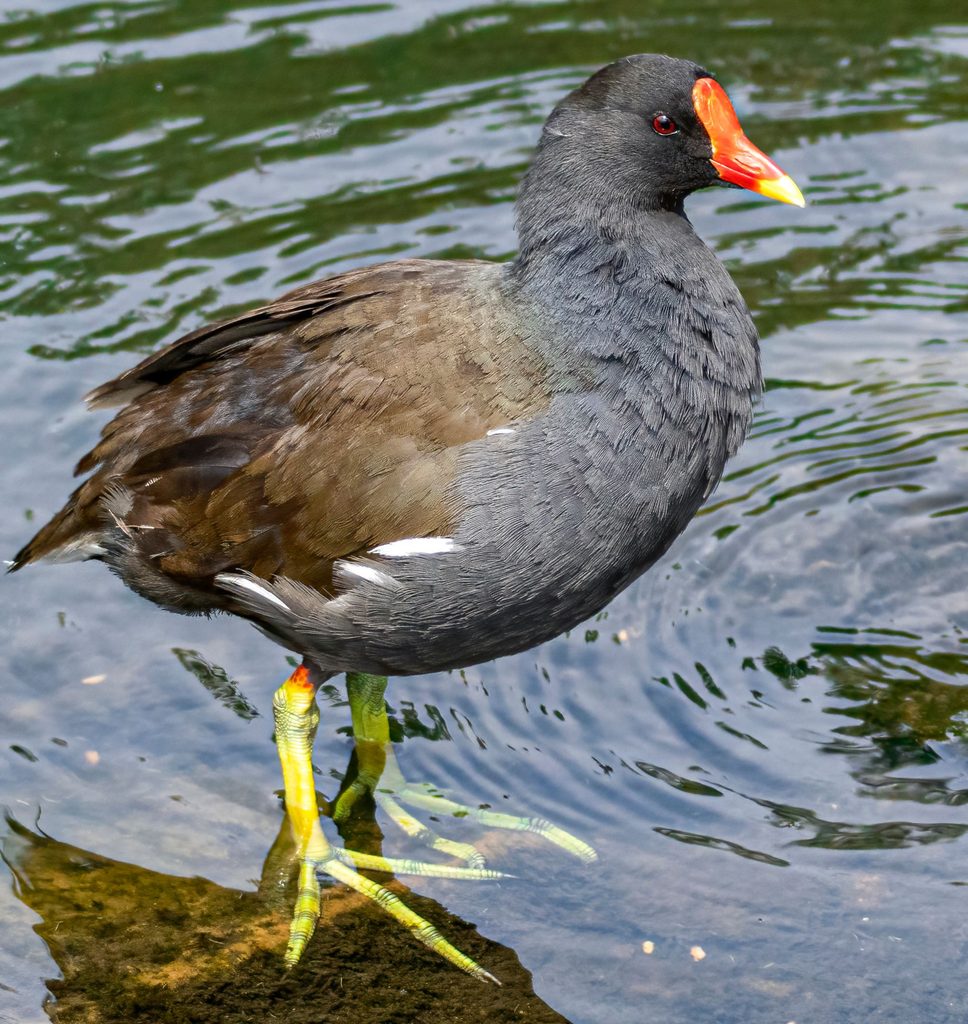
Name: Moorhen
Latin Name: Gallinula chloropus
Most likely to be seen: In and around the pond
Wildlife Spotter rating: Fairly easy
Did you know?
A moorhen can raise up to three broods in a single year, and the older chicks often help feed their younger brothers and sisters.
Photo: Marian Florinel Condruz on Pexels Do you have pictures of moorhens in the park that we could use? If so, please contact us.
The moorhen is a neat, dark water bird with a bright red bill tipped in yellow. Its body is slate grey-black, with a white stripe along each side and a flash of white under the tail. You’ll often spot that tail before the bird itself, as it flicks it with every step. Its long yellow-green legs and toes are made for walking across floating leaves and soggy ground, and the name has nothing to do with moorland. It comes from an old word for marsh or pool.
Moorhens are not fussy eaters. They pick over water plants, seeds, berries, insects, snails and worms, and they will happily graze on the grass beside the pond. They’re shy birds, and at the first sign of trouble they dash for cover in the reeds. They can even climb into low branches to roost or nest.
In spring, pairs build a nest of reeds and leaves close to the water. Some pairs build extra “dummy” platforms too. The chicks are fluffy and black, with red bills and bald-looking red heads. They can swim within hours of hatching, and they need plenty of cover while they grow.
Moorhens are common, but they rely on clean water and thick, plant-lined banks. Litter, disturbance and tidied-up edges can all push them out. The pond’s planted margins give them the shelter they need.
Coot or Moorhen?
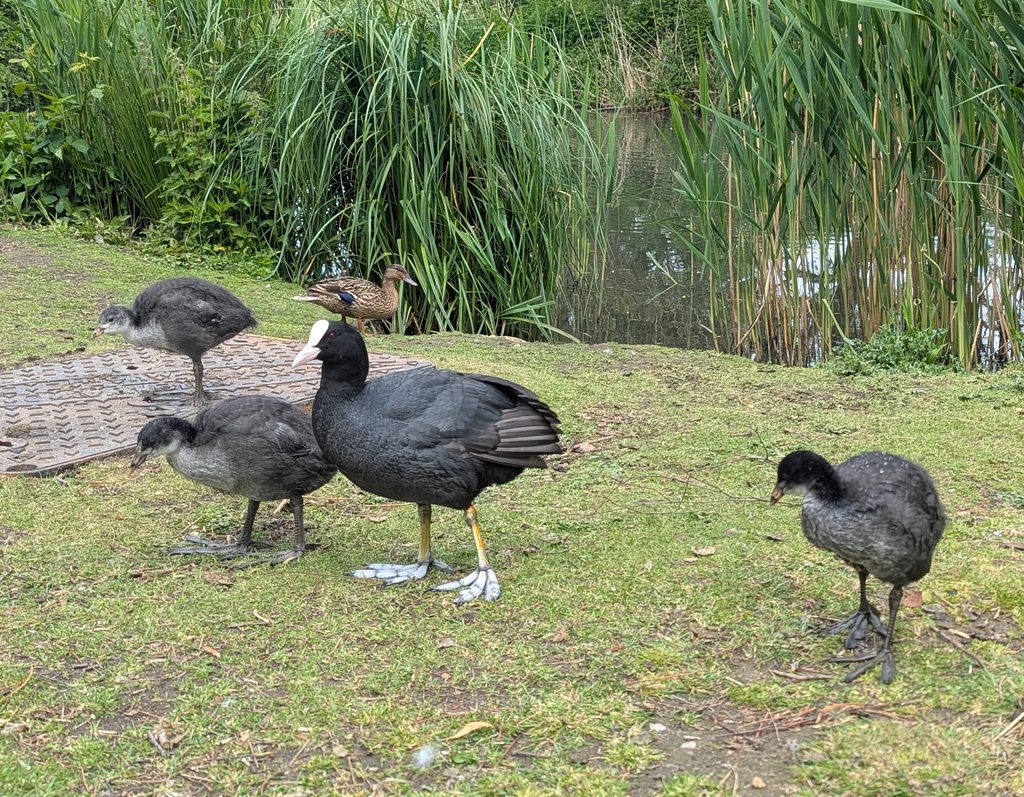
The quick check is the bill. A moorhen’s is red and yellow, while a coot’s is white. Moorhens are also slimmer, spend more time walking at the water’s edge and, unlike coots, they rarely dive.
Do you have pictures of coots in the park that we could use? If so, please contact us.
To help moorhens you can:
- Bin your litter: Take litter home or use one of the many bins around the pond. Litter attracts rats and can harm coots and their chicks, as well as other wildlife.
- Skip the bread: It fills birds up without giving them what they need and can pollute the water.
- Protect the edges: Reeds and waterside plants give coots nesting places and shelter, so please keep to the paths and leave them undisturbed.
- Give nests space: Watch from a distance, especially in spring.
NO DOGS ALLOWED
Please note: Dogs are not allowed in the fenced area around the pond; this helps protect the wildlife in this area from accidental harm or stress. It also gives people who may not be as confident around dogs a safe space to sit and enjoy the park.