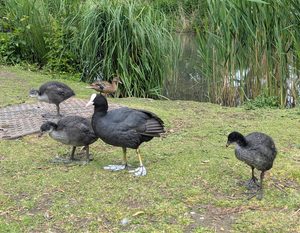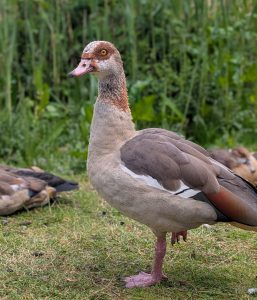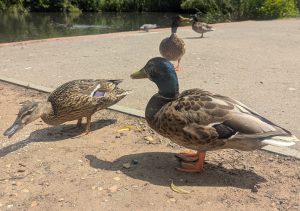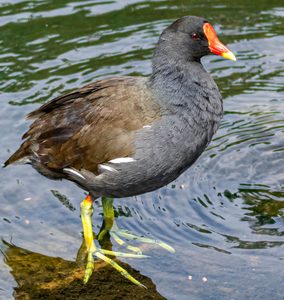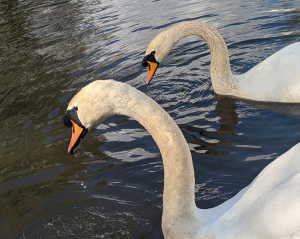

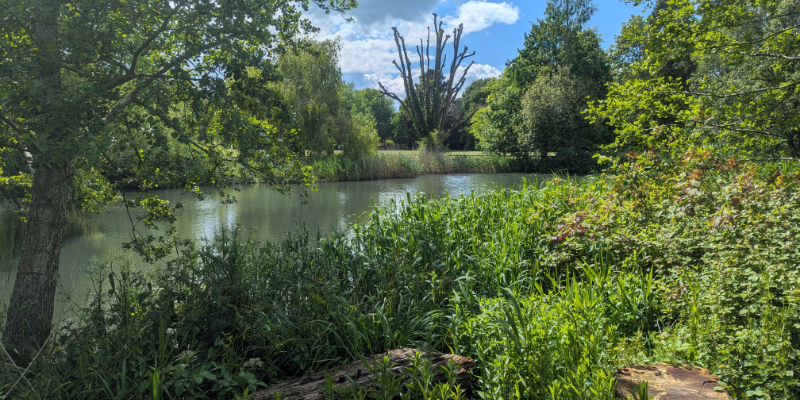
The pond supports breeding Mallards, Coots, Swans and Moorhens and more recently, a very successful pair of Egyptian geese.
The pond acts as an attenuation bowl, gathering excess surface water from the surrounding area and slowly releasing it to reduce flooding, as well as capturing pollutants that might otherwise find their way into the River Arun. That’s a significant job, and one that doesn’t get much appreciation from visitors who are simply there to watch the ducks. Two diesel spills over the years tested that resilience, and the pond absorbed both doing its job quietly, as it always does.
It hasn’t always had an easy time of it. Years of accumulated silt, overhanging vegetation, and an imbalance in fish stocks gradually took a toll on water quality and biodiversity. From 2021, Horsham District Council undertook a substantial improvement programme: dredging the sediment from the pond floor, selectively removing trees to open up light and viewpoints, re-homing healthy native fish species to improve water quality, and installing new boundary fencing fitted with hedgehog highway tunnels.
As part of that restoration, trees and shrubs were cleared to open up views and allow more air to circulate across the water, both improving its quality and making the whole area feel less closed in. The result is a pond that feels more alive, more visible, and more connected to the park around it.
What the pond does best, though, is simply be there. It anchors the park. It gives people a reason to slow down, to stop and look, and in a busy market town, that’s no small thing.