

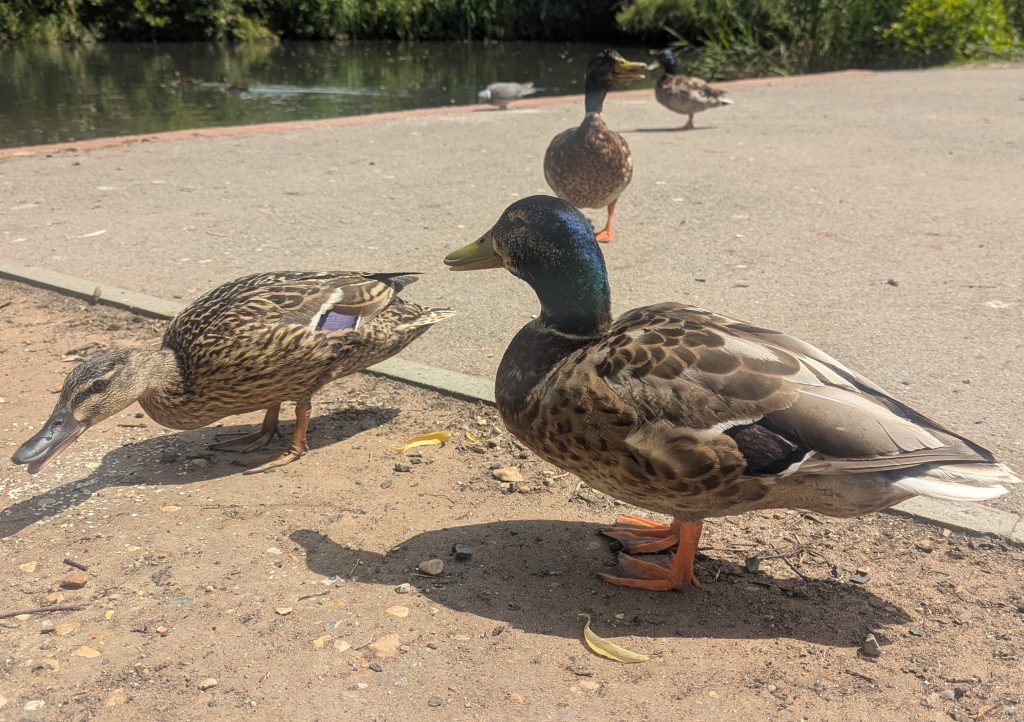
Name: Mallard
Latin Name: Anas platyrhynchos
Most likely to be seen: On or around the pond. Occasionally on the grass just outside the pond.
Wildlife Spotter rating: Very easy
Did you know?
Only female mallards quack. Drakes make a softer, rasping sound.
Do you have pictures of Mallards in the park that we could use? If so, please contact us.
The mallard is the duck most of us picture when we think of a duck. The male (called a drake) has a glossy green head, a white neck ring and a yellow bill. The female is mottled brown, which helps her stay hidden on the nest. Both have a bright blue patch on each wing, edged with white, which you can often spot when they preen or stretch.
Mallards are happy to eat almost anything. They dabble in shallow water, tipping head-down with their tails in the air to reach seeds, water plants, snails, insects and small creatures. On land they graze on grass and fallen seeds.
Spring is nesting time. The female makes a shallow nest on the ground, often close to water and well hidden in thick vegetation, and lays around nine to thirteen eggs. The fluffy ducklings hatch after about 28 days and follow their mother to the water within hours. Only the female raises them.
In summer, drakes lose their bright feathers and look much like the females. This is called an “eclipse” moult, and for a few weeks they aren’t able to fly. By autumn the green heads are back.
To help mallards you can:
- Skip the bread: Bread fills ducks up without feeding them properly. Offer oats, peas, sweetcorn or chopped lettuce instead, and only a little at a time.
- Bin your litter: Take litter home or use one of the many bins around the pond. Litter attracts rats and can harm swans and cygnets as well as other wildlife.
- Keep away from the edge: Long grass and shrubby banks give nesting females cover and ducklings a place to hide.
- Give them space: If you spot a nest or a family, watch from a distance.
NO DOGS ALLOWED
Please note: Dogs are not allowed in the fenced area around the pond; this helps protect the wildlife in this area from accidental harm or stress. It also gives people who may not be as confident around dogs a safe space to sit and enjoy the park.