

Name: Coot
Latin Name: Fulica atra
Most likely to be seen: In and around the pond
Wildlife Spotter rating: Easy
Did you know?
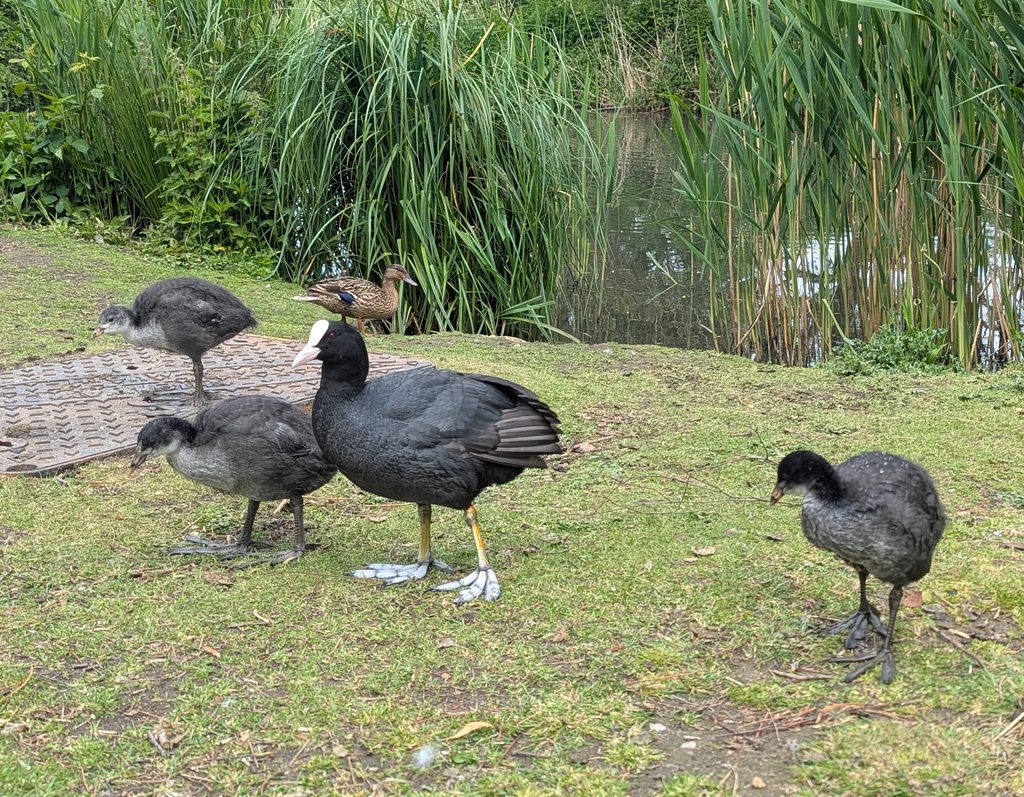
Coots don’t have webbed feet like ducks. Instead, each long toe has its own broad flaps of skin
Do you have pictures of Coots in the park that we could use? If so, please contact us.
If you spot a dark, plump water bird with a gleaming white patch above its beak, you’ve probably found a coot. Its body is sooty black or slate grey, its bill is white, and the white patch on its forehead is called a frontal shield. It looks a bit like a bald head, which brings us to a very old saying.
“Bald as a coot” has been around for centuries. Coots aren’t really bald; their white foreheads just look like a bald head. In older English, “bald” could also mean having a white patch, so the name may have fitted coots twice over.
Coots eat mostly water plants, algae and snails, and they sometimes graze on the bank. They are feisty, too. In spring, pairs defend their patch of water fiercely, chasing off rivals and even much larger birds. Their nests are soggy piles of reeds and sticks, tucked among the plants at the water’s edge.
Coots are common and not currently of conservation concern, but they do still depend on clean water and being left alone. Litter and disturbance can all cause harm.
Coot or Moorhen?
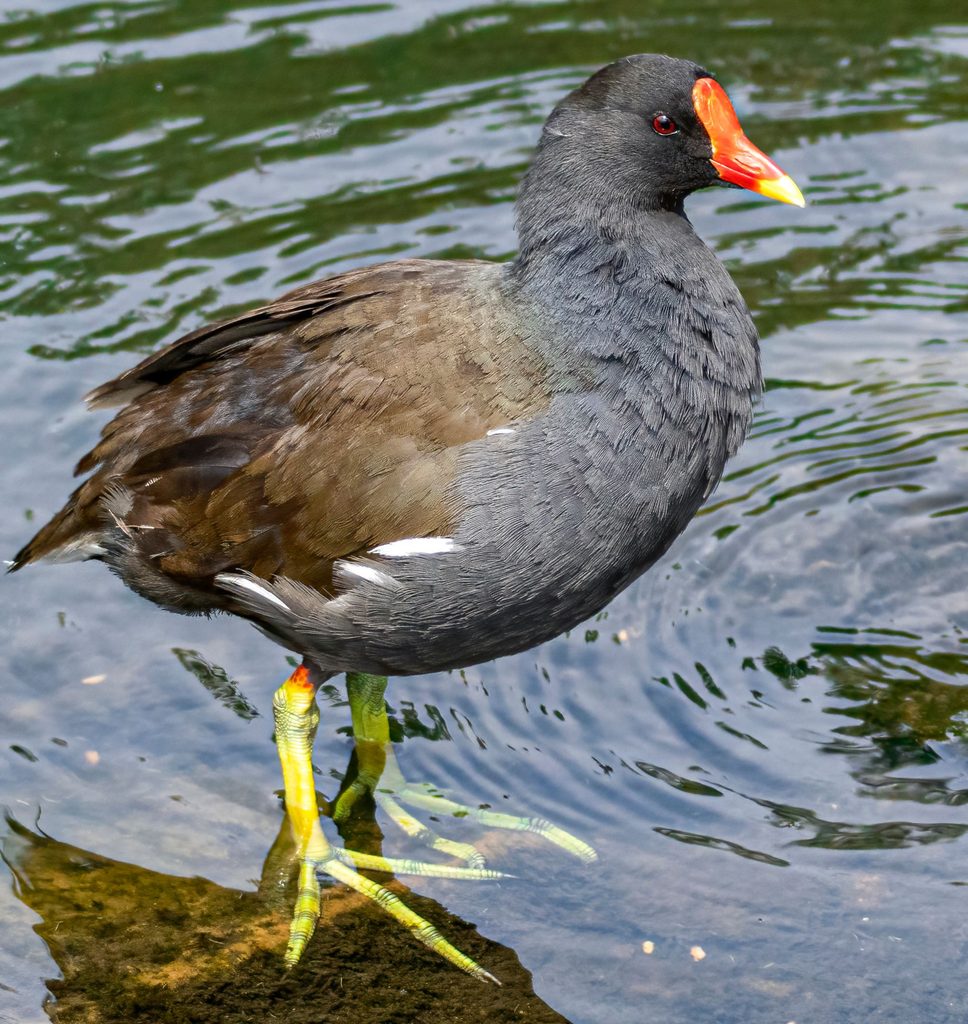
The quick check is the bill. A coot’s is white, while a moorhen’s is red and yellow. Coots are also larger. Moorhens spend more time walking at the water’s edge and, unlike coots, rarely dive.
Photo: Marian Florinel Condruz on Pexels Do you have pictures of moorhens in the park that we could use? If so, please contact us.
To help coots you can:
- Bin your litter: Take litter home or use one of the many bins around the pond. Litter attracts rats and can harm coots and their chicks, as well as other wildlife.
- Skip the bread: It fills birds up without giving them what they need and can pollute the water.
- Protect the edges: Reeds and waterside plants give coots nesting places and shelter, so please keep to the paths and leave them undisturbed.
- Give nests space: Watch from a distance, especially in spring.
NO DOGS ALLOWED
Please note: Dogs are not allowed in the fenced area around the pond; this helps protect the wildlife in this area from accidental harm or stress. It also gives people who may not be as confident around dogs a safe space to sit and enjoy the park.