
Name: Black-headed gull
Latin Name: Chroicocephalus ridibundus
Most likely to be seen: On and around the pond
Wildlife Spotter rating: Easy
Did you know?
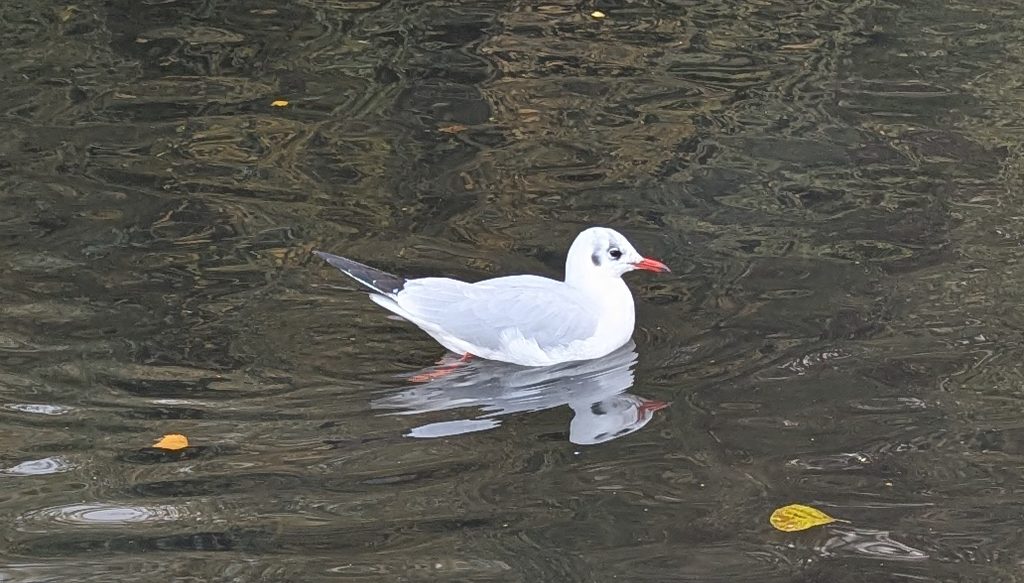
Despite its name, the Black-headed Gull’s head isn’t black. In spring and summer it’s chocolate brown, and for the rest of the year it’s white with a dark smudge behind each eye.
Do you have pictures of Black-headed gulls in the park that we could use? If so, please contact us.
The Black-headed Gull has a confusing name, because its head isn’t black. In spring and summer, it has a chocolate-brown hood, which can look black from a distance. For much of the year, including through the winter, the head is white with a dark smudge behind each eye. It is a small gull, 35 to 39 centimetres long, with silver-grey wings, a dark red bill and red legs.
Black-headed Gulls will eat almost anything. They pull earthworms and insects from wet grass, pick over fields and playing fields, and snatch food from the water. They are quick, agile flyers and are often noisy. A harsh, rasping “kree-ar” call is the usual giveaway, and groups will squabble loudly over food.
Our gulls are a mix of local and visiting birds. About 140,000 pairs breed in the UK, nesting in noisy colonies on islands in gravel pits, reservoirs and saltmarshes. In winter, the population leaps to over two million as birds arrive from mainland Europe, Iceland and Russia. Many roost on large lakes at night and spread out across parks and fields by day, which is why you can see them inland, far from the sea.
Black-headed Gulls were quite rare in the early 19th century, then increased through the 20th century and spread inland. They are common, but they are now on the UK’s Amber List of birds of conservation concern. Their winter population fell by around 31% between 1995/96 and 2020/21.
NO DOGS ALLOWED
Please note: Dogs are not allowed in the fenced area around the pond; this helps protect the wildlife in this area from accidental harm or stress. It also gives people who may not be as confident around dogs a safe space to sit and enjoy the park.