

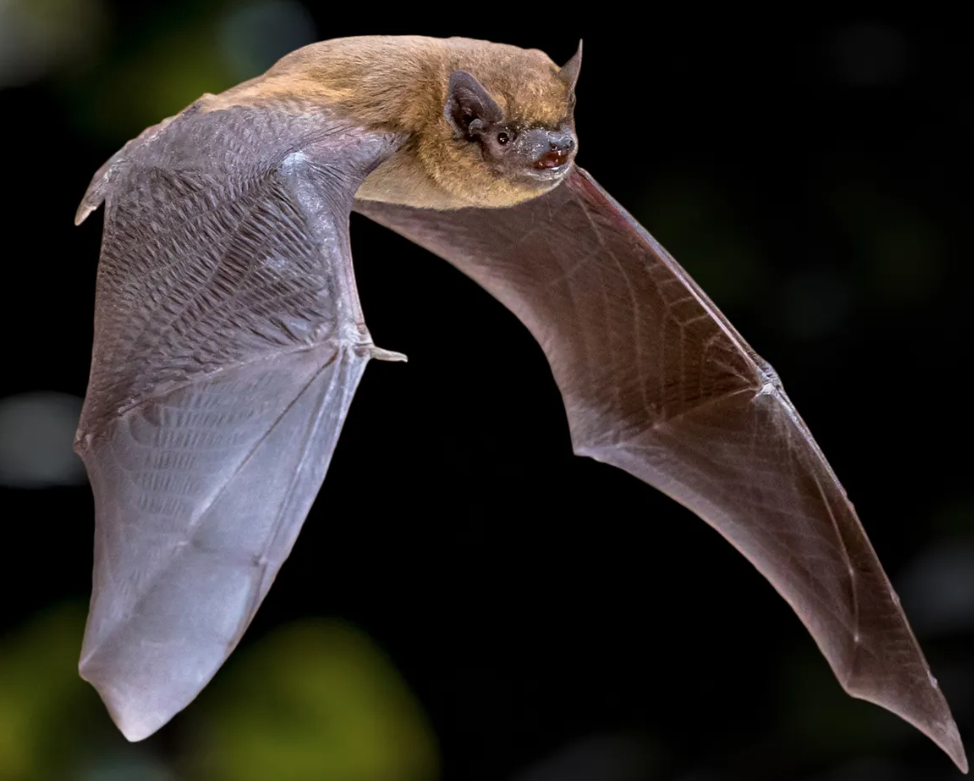
Name: Pipistrelle bats (common and soprano pipistrelle)
Latin Name: Pipistrellus pipistrellus (common pipistrelle) or Pipistrellus pygmaeus (soprano pipistrelle)
Most likely to be seen: Flying at dusk over the football pitches, the pond, the meadow and around the wooded edges of the park.
Wildlife Spotter rating: Difficult
Did you know?
A pipistrelle weighs about the same as a 20p coin, but can eat up to 3,000 insects in one night.
Photo: https://ibats.org.uk/ Do you have pictures of pipistrelle bats in the park that we could use? If so, please contact us.
Pipistrelles are the smallest and most common bats in Britain. Each is only about the size of an adult’s thumb, with a wingspan of around 20 to 25 centimetres. If you are near the pond or meadow as the light fades on a summer evening, you may spot one flickering above you, twisting and darting after insects.
There are two kinds: the common pipistrelle and the soprano pipistrelle. They look almost identical, and scientists only recognised them as separate species in the 1990s. The easiest way to tell them apart is by sound. Both use high-pitched calls to find their way and catch food in the dark, but the soprano’s calls are higher. We can’t hear them without a special bat detector, so we tend to use just pipistrelles.
Bats are not blind, and they are not interested in your hair. They hunt midges, mosquitoes and other small flying insects, which makes them very welcome neighbours. Pipistrelles also squeeze into remarkably small spaces to roost, such as cracks in old trees, gaps behind loose bark and crevices in buildings. In summer, females gather in groups to raise a single pup each year. In winter, they find a quiet, sheltered spot and hibernate (go into a deep sleep to save energy).
All bats and their roosts are protected by law in the UK, even when no bats are home. Pipistrelles are among our most widespread bats, but they still depend on dark places to roost and plenty of insects to eat. Wild corners, old trees, the pond and the hedgerows in Horsham Park all help provide both.
To help bats in the park:
- Visit at dusk and look, don’t disturb: Watch from the paths as the light fades, and please don’t shine torches at bats or try to get close.
- Leave deadwood and old trees alone: Cracks and loose bark make perfect roosts, so please don’t pull bark off trees or damage trunks.
- Support wild corners: Long grass, hedgerows and the pond all attract the insects that bats eat.
To help bats at home you can:
- Plant for night-flying insects: Flowers such as honeysuckle and evening primrose attract moths, which are a favourite bat food.