

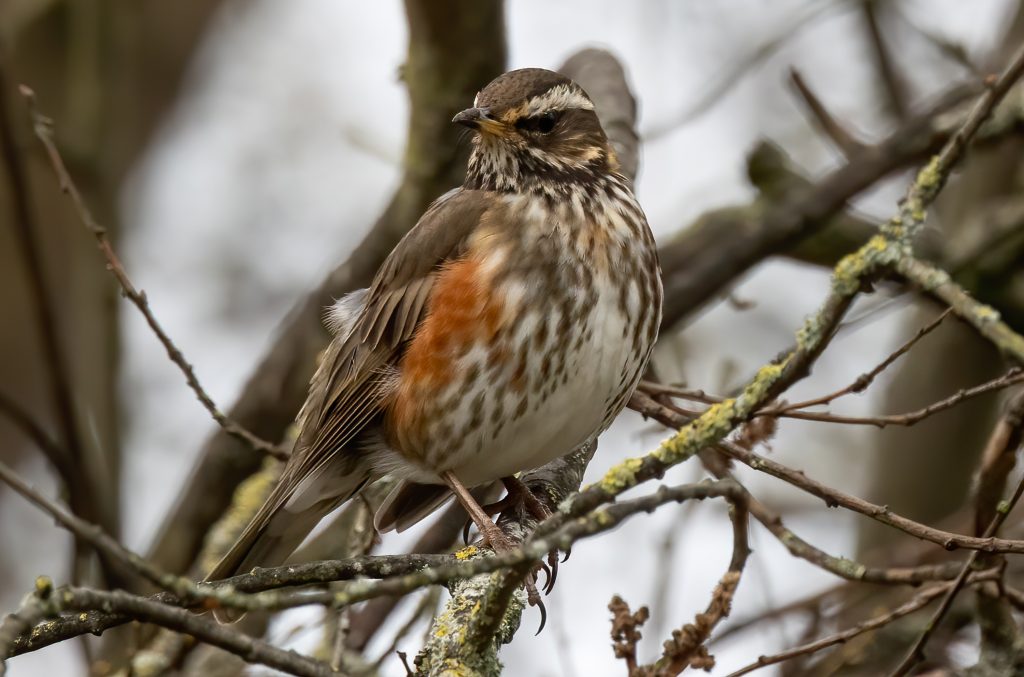
Name: Redwing
Latin Name: Turdus iliacus
Most likely to be seen: In autumn and winter, feeding in the hedgerows. Keep an eye on berry‑bearing trees and quiet grassy areas.
Wildlife Spotter rating: Fairly difficult
Did you know?
Redwings are the UKs smallest true thrush.
Image by Kev on Pixabay . Do you have any pictures of Redwings in the park that we could use? If so, please contact us.
Slightly smaller than a song thrush, the Redwing can be recognised by its creamy stripe above the eye and the striking orange-red patches along its flanks and underwings.
This bird is not a year‑round resident. Instead, it is a winter visitor, arriving in the UK from northern Europe from late September and staying until around April. Only a very small number of pairs breed in the far north of Scotland.
Redwings are highly nomadic, moving around the countryside in search of food. They are most often seen in flocks, sometimes alongside other thrushes such as fieldfares, hopping across fields or gathering in berry-laden trees and hedgerows.
Their diet changes with the season. During winter, they rely heavily on berries such as hawthorn, rowan and holly, but will also feed on worms and other invertebrates when conditions allow. In severe weather, when frozen ground or snow makes food scarce, they may venture into parks and gardens to feed.
Redwings are shy birds and can be easily disturbed, often flying off quickly if approached. However, on cold days they may remain longer in sheltered areas where food is available. If you listen carefully on clear autumn nights, you might hear their high, thin “tsee” calls as migrating flocks pass overhead.
Although still a regular winter visitor, the redwing is listed as an Amber species in the UK, meaning it requires conservation attention. Protecting hedgerows, berry‑bearing shrubs and natural green spaces helps ensure these travelling birds continue to find food and shelter when they arrive each year.
Information from: