

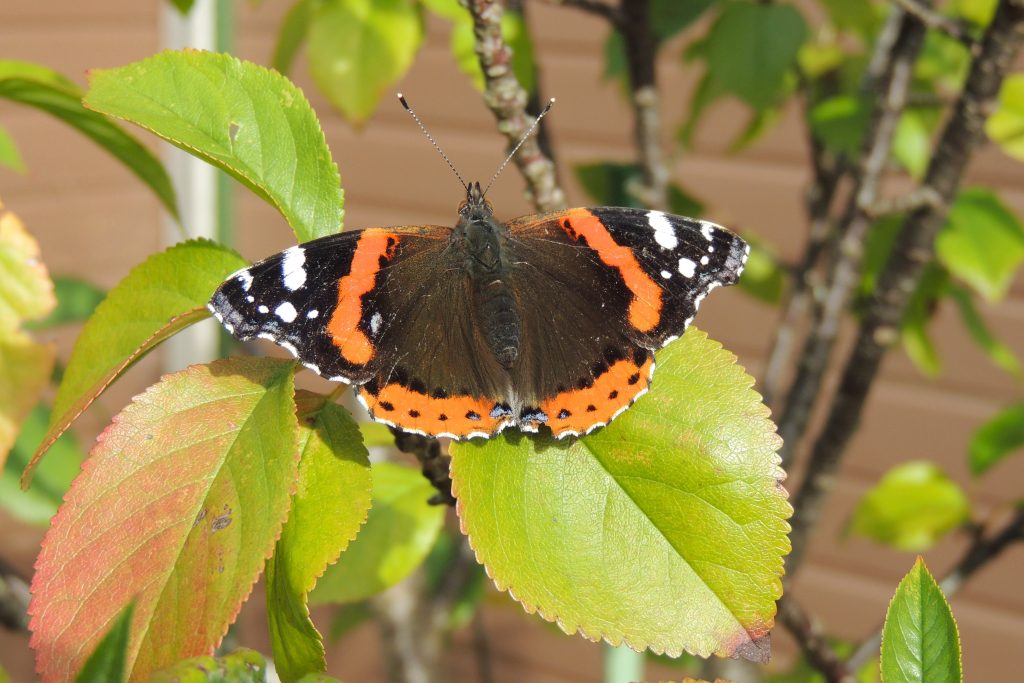
Name: Red admiral
Latin Name: Vanessa atalanta
Most likely to be seen: Park House Sensory Garden, the tennis court flower beds or sunny paths, spaces or benches.
Wildlife Spotter rating: Easy
Did you know?
Red admirals love warm surfaces, you’ll often see them sunbathing on tree trunks, fences or even park benches.
Photo: Patrick Nizan on Pexels . Do you have pictures of red admirals in the park that we could use? If so, please contact us.
The red admiral is one of the most striking butterflies in the UK, with bold black wings, bright red bands and white spots. They are strong, confident fliers and can be seen gliding or darting around the park from spring right through to autumn.
Red admirals are big fans of sunshine. On warm days they feed on nectar from flowers such as buddleia, ivy, thistles and brambles. They also enjoy fallen fruit in late summer, especially windfall apples and plums.
Although many red admirals migrate to the UK from Europe each year, some now stay over winter thanks to milder weather. You might spot one on a sunny winter day, warming itself before searching for food.
Female red admirals lay their eggs on stinging nettles, which are the main food plant for their caterpillars. The caterpillars hide inside little folded leaves, feeding safely until they are ready to pupate and emerge as adults.
How to be a Red Admiral Ally
To help red admirals you can:
- Grow nectar‑rich flowers: Buddleia, ivy, thistles and other native blooms give adults plenty to feed on.
- Leave some nettles: Caterpillars rely on stinging nettles to grow, so a small patch helps them thrive.
- Keep wild corners wild: Red admirals use brambles, ivy and sheltered spots for feeding and resting.
- Avoid pesticides: Chemicals can harm butterflies, caterpillars and the plants they depend on.
- Watch don’t catch: Butterflies are delicate, enjoy them without touching.