
Name: Holly blue butterfly
Latin Name: Celastrina argiolus
Most likely to be seen: Holly bushes and ivy particularly around Park House and along North Parade.
Wildlife Spotter rating: Medium
Did you know?
Holly blues often fly higher than most other blue butterflies, so you’ll see them fluttering around bushes and tree tops rather than close to the ground.
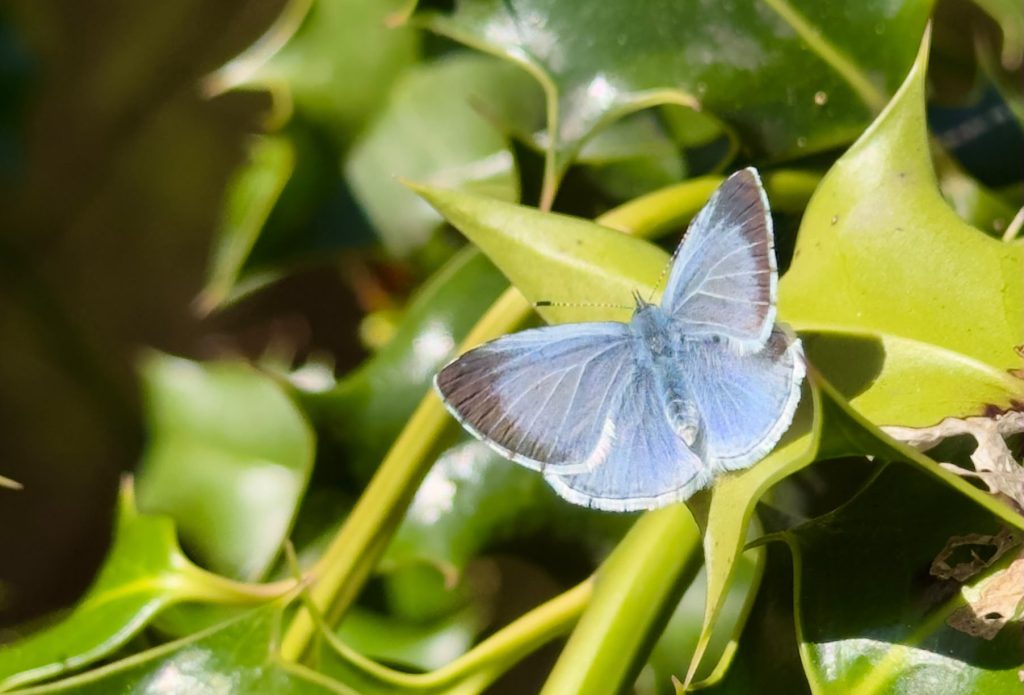
Photo: Conor Weedon
The holly blue is a small, delicate butterfly with bright sky‑blue wings. It’s one of the earliest butterflies to appear in spring, often seen fluttering around holly bushes, ivy and sunny hedgerows. Unlike many other blue butterflies, holly blues tend to fly upwards, exploring shrubs and low branches rather than staying near the ground.
When the holly blue rests, it closes its wings to reveal a pale, speckled underside that helps it blend in with leaves and bark. Males and females look similar, though females have a thin dark border around the edge of their wings.
Holly blues have a fascinating life cycle. In spring, females lay their eggs on holly, where the caterpillars feed and grow. Later in the year, the second generation switches to ivy, making this butterfly one of the few species that uses different plants depending on the season. This clever strategy helps them survive and thrive in parks and gardens.
The caterpillars are tiny and well‑camouflaged, feeding quietly on flower buds before pupating. Adults emerge looking fresh and bright, often seen flying along sunny paths or resting on warm walls and tree trunks.
How to be a Holly Blue Helper
To support holly blues you can:
- Grow holly and ivy: These are the key plants for their caterpillars in spring and summer.
- Plant nectar‑rich flowers: Bluebells, forget‑me‑nots, bramble and other native blooms help adults feed.
- Leave wild corners: Holly blues use sheltered spots for resting and pupating.
- Avoid pesticides: Chemicals can harm butterflies, caterpillars and the plants they rely on.