

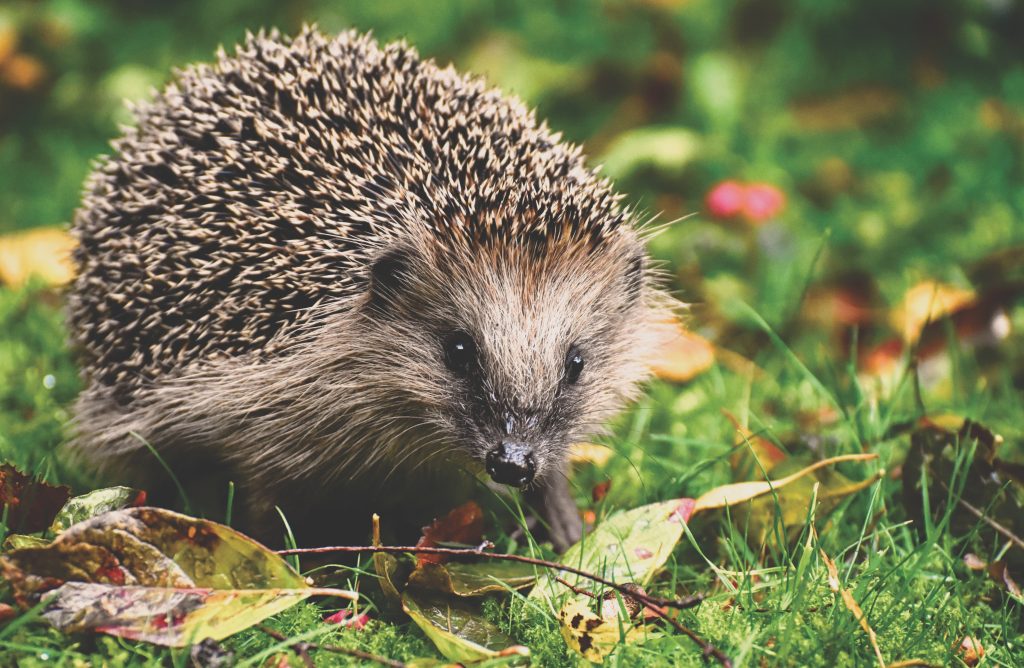
Name: Hedgehog
Latin Name: Erinaceus europaeus
Most likely to be seen: At night in undergrowth or crossing the park.
Wildlife Spotter rating: Very difficult
Did you know?
Hedgehogs can run surprisingly quickly when they need to, up to 4 miles per hour.
Do you have any pictures of hedgehogs in the park that we could use? If so, please contact us.
Hedgehogs are one of the UK’s most recognisable mammals, known for their rounded bodies and coat of sharp spines. The species found in Britain is the European hedgehog, Erinaceus europaeus, and it’s the only hedgehog you’re likely to see in Horsham Park. These small, nocturnal animals spend their nights searching for beetles, worms and other invertebrates, using their excellent sense of smell to find food in the grass and under shrubs.
Although hedgehogs are mostly active at night, there are a few signs to look out for. Their droppings are dark, slightly shiny and often full of beetle wing cases. You might also spot narrow trails through long grass or hear rustling under bushes at dusk. If you’re lucky enough to see a hedgehog, watch from a distance, they’re shy animals and can become stressed if approached too closely.
Hedgehogs are well adapted to life in parks and gardens, but their numbers have fallen in recent decades. Loss of habitat, busy roads and tidy gardens with few hiding places all make life harder for them.
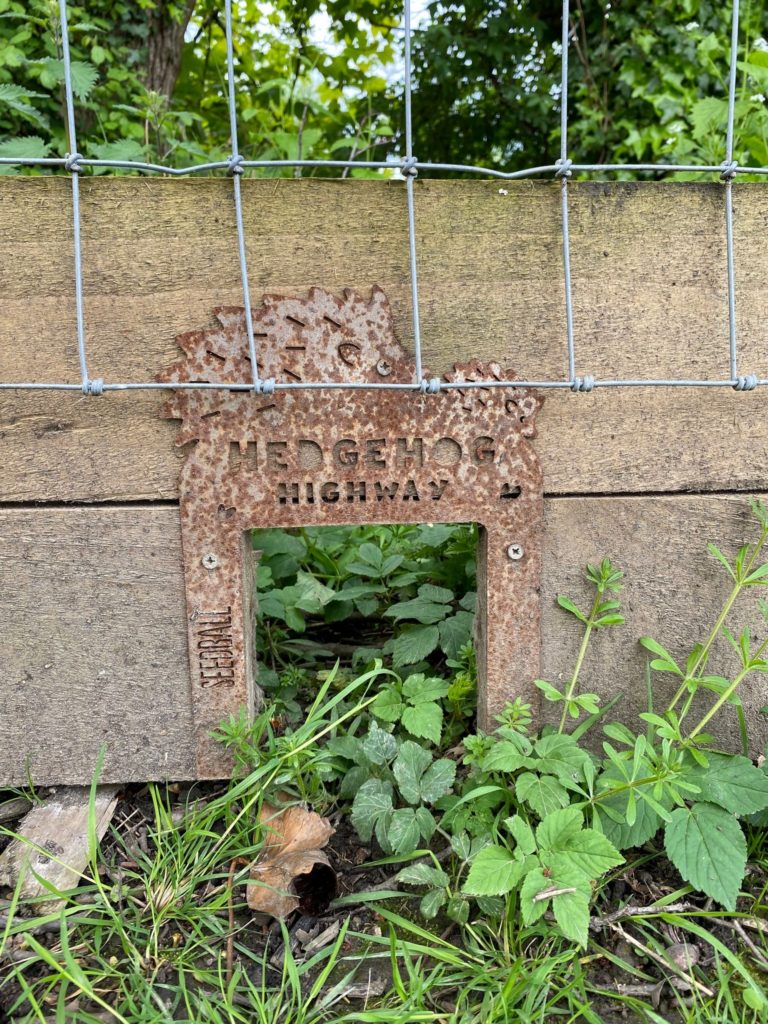
Parks like Horsham provide important green spaces where hedgehogs can forage, nest and move safely between habitats and you may have seen the “hedgehog gates” in the fencing around the pond that allows them to come and go as they please.
How to be a hedgehog helper
To help our hedgehogs, you can:
- Make gardens accessible and safe: Cut 13x13cm holes in fences, add hedgehog houses or wild areas, and provide escape routes from ponds/drains.
- Provide food and water: Leave out meaty cat/dog food or hedgehog food with fresh water. Don’t feed them milk or bread.
- Avoid hazards: Avoid pesticides, particularly slug pellets, and keep and raise bird netting off the ground.
- Check: Check carefully before mowing, strimming, or lighting bonfires.
- Support their survival year-round: Feed more in autumn, help underweight winter hedgehogs, and encourage your neighbours to create connected “hedgehog highways”.
If you see sick, injured, or daytime-active hedgehogs. Do not interfere with them, contact the RSPCA who will be able to advise you.