
Name: Ginkgo (also called the maidenhair tree)
Latin Name: Ginkgo biloba
What3Words Location: ///flute.magma.spin
Did you know?
Ginkgo fossils show that very similar trees grew on Earth more than 200 million years ago, which makes this one of the oldest kinds of tree alive today.
Information:
The ginkgo is often called a living fossil. It’s the last survivor of an ancient family of trees that once grew across much of the world, and fossils of its fan-shaped leaves look almost identical to the ones on the tree today. In the wild it comes from China, and it was first planted in Britain in the 1700s.
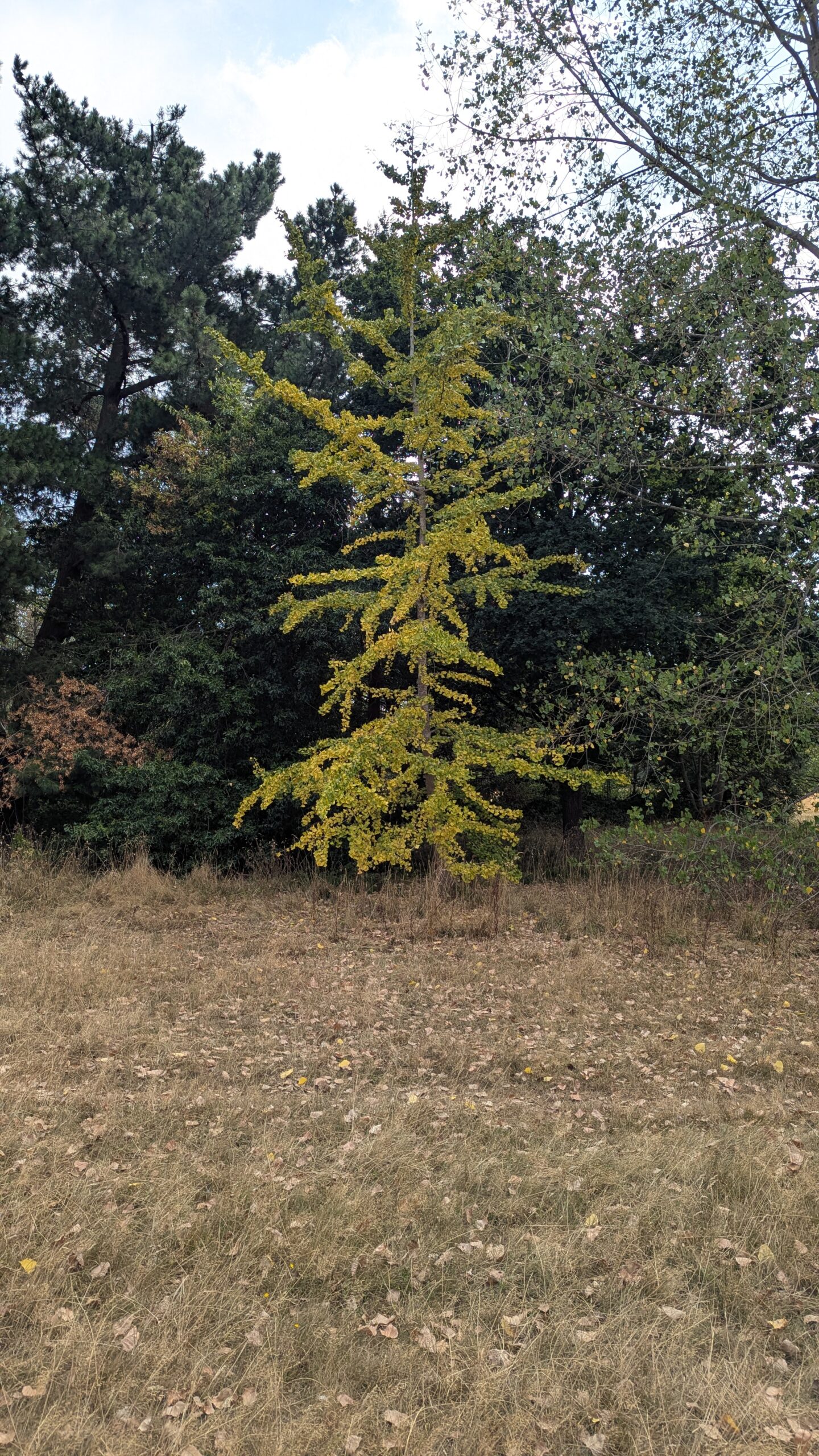
You can spot a ginkgo by its leaves. They are shaped like little fans with a notch in the middle (the “biloba” in its name means “two lobes”). In autumn they turn a glowing golden yellow, and then often drop all at once, leaving a bright carpet beneath the tree. It’s not a conifer, even though it’s often grouped with them, and it’s deciduous, which means it sheds its leaves each year.
This tough tree copes well with pollution, which is why it’s so often planted in towns and cities. Ginkgos are either male or female. Female trees produce fleshy seeds that smell unpleasant when they fall, so most planted ginkgos are male.