
Name: Fieldfare
Latin Name: Turdus pilaris
Most likely to be seen: The meadow, and on/in hedgerows and berry-bearing trees and shrubs around the park.
Wildlife Spotter rating: Challenging
Did you know?
The fieldfare’s name comes from Old English and means “traveller over fields”.
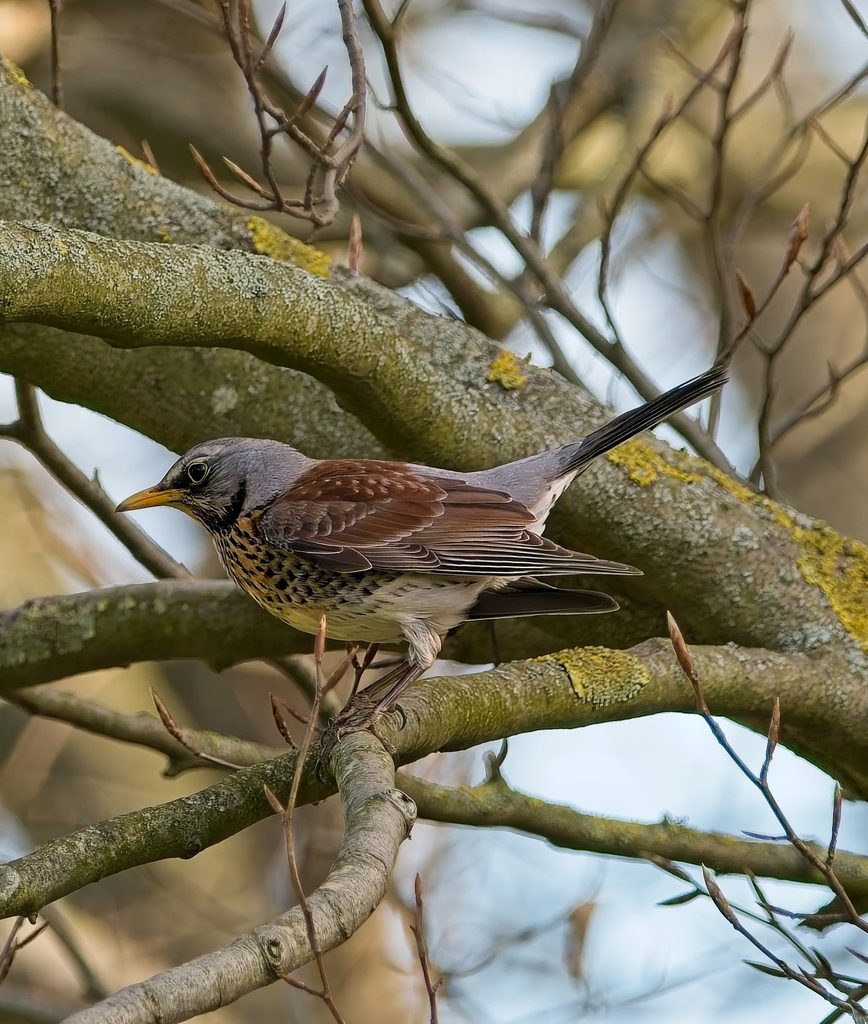
Photo: ArWeltAtty Attila on Pexels Do you have pictures of Fieldfares in the park that we could use? If so, please contact us.
The fieldfare is a large thrush, a little bigger than a blackbird. Look for a soft grey head and rump, a rich chestnut back and a golden-buff chest covered in dark speckles. Its tail is black, and in flight you may spot pale underwings. It is a noisy bird, too. Listen for a harsh, chuckling “chack-chack-chack” overhead.
Fieldfares are winter visitors. They breed in Scandinavia and northern Europe, then arrive in Britain from October as the weather turns cold. By April most have left again. They travel in loose flocks, often alongside redwings, so a good tip is to check any group of thrushes carefully.
Out on open grass, fieldfares hunt for earthworms and insects, standing upright, then running and pausing. When the ground is hard or frozen, they turn to berries and fruit. Hawthorn, holly, rowan and rotting apples are all favourites. A single flock can strip a hedge in a few days, which is why a mix of berry plants matters.
This is a bird that depends on our winter food. Very few fieldfares nest in the UK, and the species is on the UK’s red list of birds of conservation concern. Mild autumns can delay their arrival, and tidy, berry-free hedges leave them hungry.
In Horsham Park, our hedgerows, meadow and fruiting trees give visitors like this a place to feed and rest. Look in the early morning, when flocks are often at their most active and the park is at its quietest.
How to be a Fieldfare Friend
To help fieldfares you can:
- Plant berry shrubs: Hawthorn, holly, rowan and crab apple all give winter food, and they work well in a garden too.
- Leave fallen fruit: Windfall apples left on the grass are a feast for hungry thrushes in cold weather.
- Keep hedges wild: Delay trimming until late winter so the berries last as long as possible.
- Avoid pesticides: Chemicals reduce the worms and insects fieldfares rely on when the ground is soft.
- Watch from a distance: Give feeding flocks space, and keep dogs on a lead near the meadow and hedgerows so they are not scared off.