
Name: Egyptian goose
Latin Name: Alopochen aegyptiaca
Most likely to be seen: On the pond or grazing on the grass nearby.
Wildlife Spotter rating: Very easy
Did you know?
Egyptian geese can nest in tree holes up to 10 metres above the ground. The goslings tumble out and bounce to the ground when they leave.
Do you have pictures of Egyptian geese in the park that we could use? If so, please contact us.
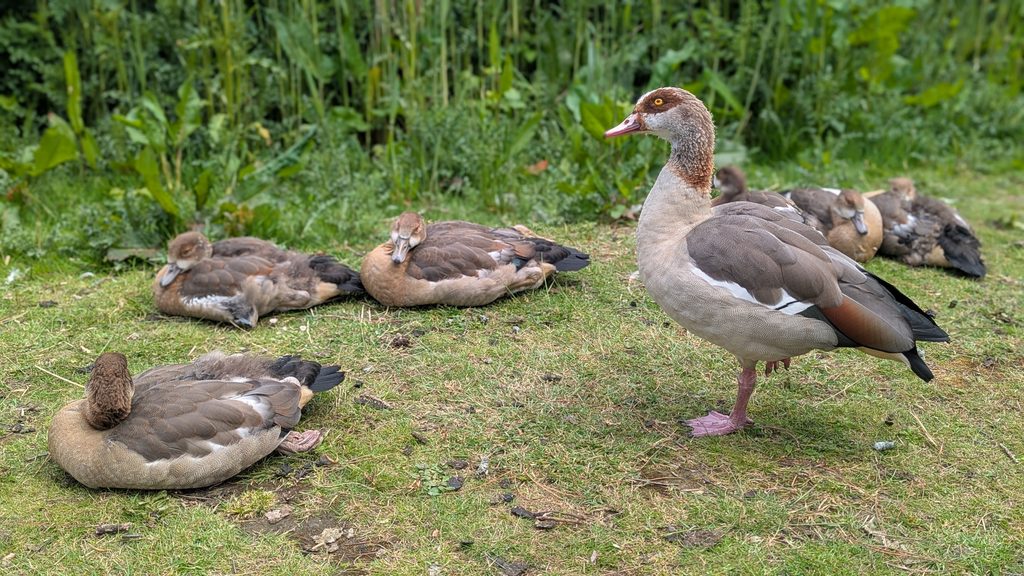
The Egyptian goose is hard to mistake. It has sandy-brown plumage, long pink legs and a dark patch around each eye, as if it is wearing a mask. In flight, you’ll see its bold white wing patches. It is a large bird, with a wingspan of well over a metre. You’re also more likely to hear them before you see them as they are very vocal!
These geese are grazers. They feed mostly on grass, seeds and leaves, and you will often see pairs and family groups wandering over the grassy areas next to the pond. They tend to stay close to water, and pairs usually remain together for life.
Egyptian geese (as their name may suggest) are not native to Britain. They come from Africa and were brought here more than 300 years ago as ornamental birds for country estates. Some escaped, and the population has since spread from East Anglia across much of southern England. They are now classed as an invasive non-native species.
The main concern is their behaviour. Egyptian geese are fiercely territorial and will chase, bite and even kill other waterbirds, including ducks, swans and other geese, especially in the breeding season. They also nest early, sometimes in winter, and so compete with native birds for nest sites such as tree holes.
The evidence of lasting harm to native wildlife is still limited, and they’re not to blame for being here. They are simply doing what any wild bird does: finding food, defending a nest and raising their young.
To live well alongside Egyptian geese you can:
- Keep your distance: Watch from a distance, especially when there are goslings. Protective parents can be aggressive, so look, don’t touch.
- Bin your litter: Take litter home or use one of the many bins around the pond. Litter attracts rats and can harm other wildlife.
- Never release pet or ornamental birds: Releasing non-native birds into the wild is illegal and is how species like this became established.
NO DOGS ALLOWED
Please note: Dogs are not allowed in the fenced area around the pond; this helps protect the wildlife in this area from accidental harm or stress. It also gives people who may not be as confident around dogs a safe space to sit and enjoy the park.