
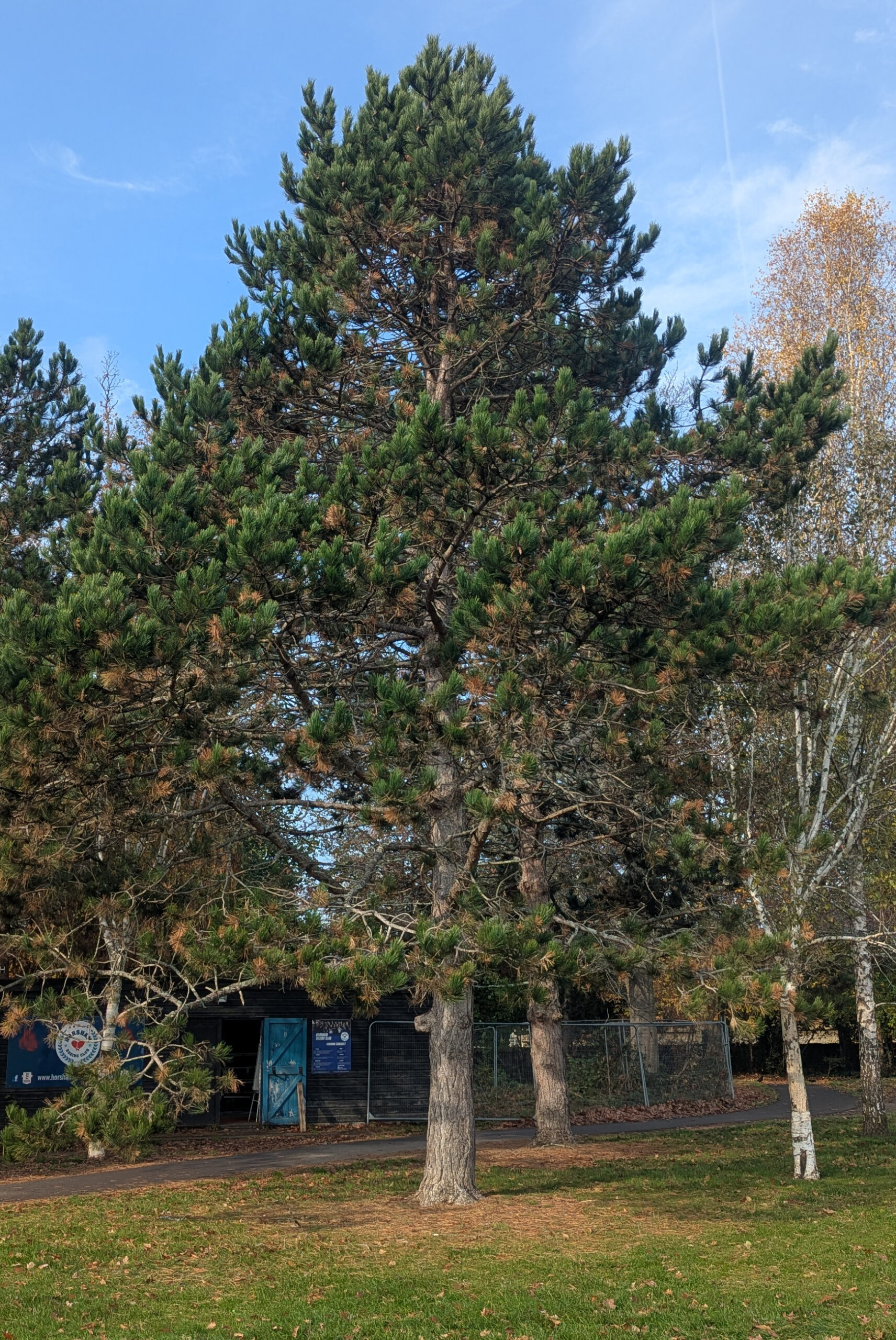
Name: Austrian pine (also called European black pine)
Latin Name: Pinus nigra subsp. nigra
What3Words Location: ///glue.state.impose
Did you know?
The needles of the Austrian pine grow in pairs and can reach 16cm long, which makes them some of the longest of any pine you’re likely to see in a UK park.
Information:
The Austrian pine is easy to spot once you know what to look for. Its bark is dark grey to almost black and split into rough plates, so in places it can look charred, as if it has been through a fire. Its stiff, dark green needles grow in pairs and stay on the tree all year round, which makes it a handy splash of colour in winter.
This is not a native British tree. It comes from central and southern Europe, and it was first planted in Britain in the 1830s. It has been a popular choice for parks, gardens and shelterbelts (rows of trees planted to block the wind) ever since. It copes well with wind, poor soil and town air, which is why you can find it in so many built-up places.
In spring the tree produces small, yellowish male cones that release clouds of pollen. The woody female cones that follow take a couple of years to ripen. Their seeds are food for birds and squirrels, and the dense evergreen branches give small birds shelter on cold days.