
Name: Robin
Latin Name: Erithacus rubecula
Most likely to be seen: Park house sensory garden, Human nature garden and in and around most hedges around the park.
Wildlife Spotter rating: Very easy
Did you know?
Young robins have no red breast at all. They are speckled brown until their first autumn.
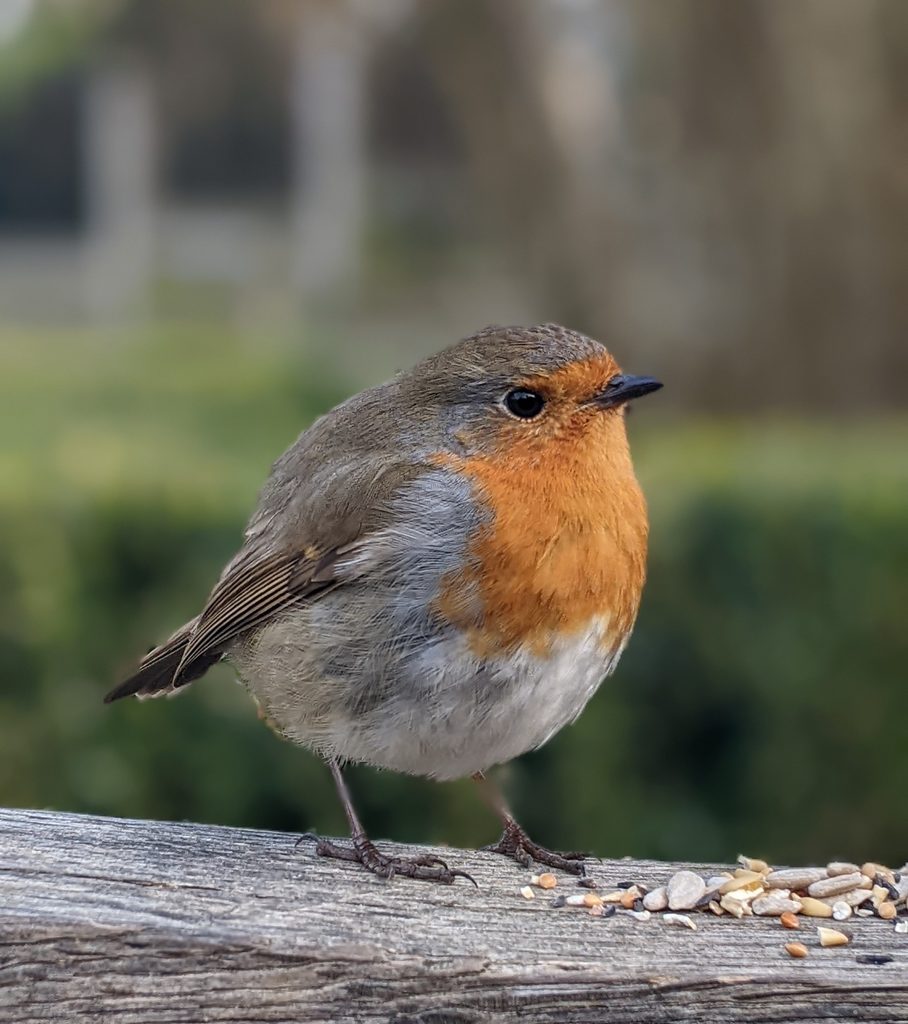
Photo: Adam Tweed
The robin is one of the easiest birds to recognise. It is small and round, with a bright orange-red face and chest, brown back and thin dark legs. Males and females look alike, so you can’t tell them apart by colour.
Robins are bold and curious, often joining us when we are digging over a flower bed, hoping to snatch a worm or insect from the turned soil. They also eat spiders, beetles, berries and seeds, so they can find food in every season.
Unlike many birds, robins sing all year round, including in autumn and winter when most other songbirds have gone quiet. That cheerful, wistful song is a way of saying “this patch is mine”. Robins are fiercely territorial, and both males and females will defend their space, sometimes even from their own reflection.
In spring, the female builds a cup-shaped nest, often tucked into a hedge, ivy or a hollow in a bank. She lays four to six eggs, and the chicks leave the nest after about two weeks. Parents may raise two or three broods in a year.
Robins are common, but they still depend on dense shrubs for nesting and shelter, and on healthy soil for food. Leaving areas of the park a little wilder gives them exactly that, and you can do the same at home.
To help robins in the park you can:
- Keep to the paths: Robins nest low down in hedges, ivy and banks from spring to late summer, so give borders and hedgerows plenty of space.
- Keep dogs under control: Robins feed and nest near the ground, so dogs can disturb them, especially from March to August.
- Leave fallen leaves where they lie: Leaf litter under shrubs and hedges hides the insects and worms that robins eat, so try to avoid the urge to scatter them!
- Watch from a distance: If a robin is carrying food, it is probably feeding chicks nearby. Stand back and let it get on with it.
To help robins at home you can:
- Plant native hedging and hold off trimming: Hawthorn, holly and ivy give robins shelter and nesting sites. Leave hedges alone until nesting is over, usually by the end of August, and avoid pesticides, which harm the insects robins feed on.