

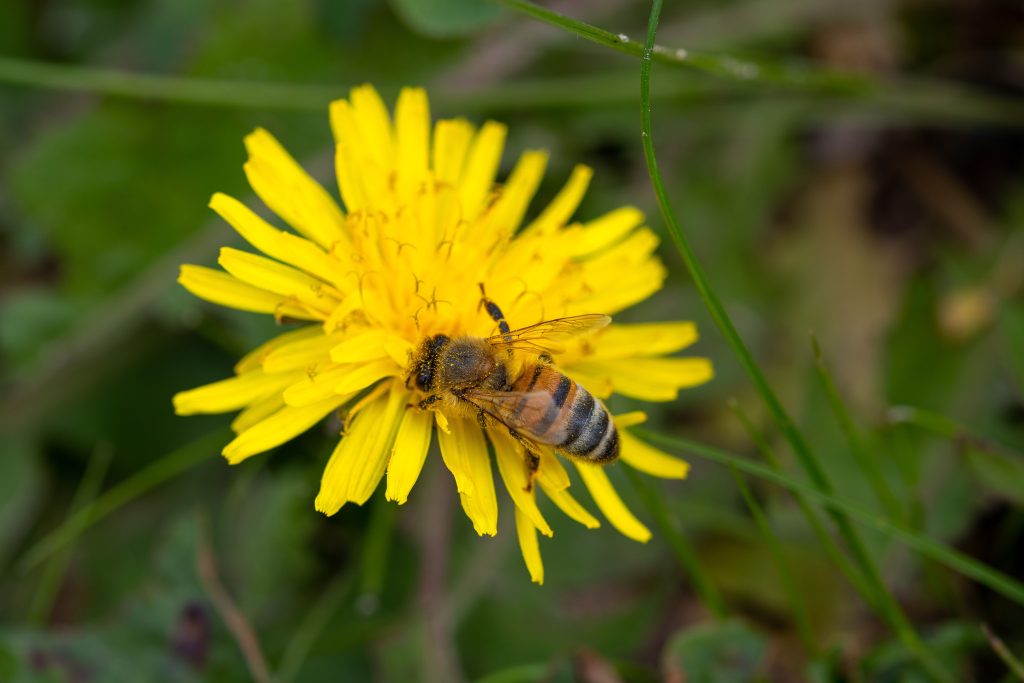
Name: Honey bee
Latin Name: Apis mellifera
Most likely to be seen: In the flowerbeds across the park and in the meadow.
Wildlife Spotter rating: Easy
Did you know?
All the worker bees you see on flowers are female. They do all the work from cleaning and feeding young bees to collecting nectar and pollen.
Photo: Fred Dendoktoor on Pexels . Do you have pictures of honey bees in the park that we could use? If so, please contact us.
Honey bees are some of the most important insects in the UK. They live in large colonies and work together as a team, collecting nectar and pollen from flowers throughout the spring and summer. Their fuzzy bodies help them pick up pollen as they move from bloom to bloom, making them excellent pollinators for wild plants, fruit trees and garden flowers.
A honey bee colony is like a tiny city. Inside the hive, thousands of worker bees care for the queen, feed the young, clean the hive and store food. The queen is the only bee that lays eggs, and she can lay up to 2,000 a day in peak season. Worker bees live for just a few weeks in summer, but winter bees can survive for several months, keeping the hive warm until spring returns.
Honey bees are gentle by nature and only sting to defend themselves or their hive. When feeding on flowers in the park, they are far more interested in nectar than in people. You’ll often see them visiting clover, dandelions, lavender, bramble and other nectar‑rich plants.
Although honey bees are managed by beekeepers, wild and feral colonies also exist. Parks and gardens provide valuable feeding grounds, especially when there is a good mix of flowers from early spring to late autumn.
How to be a Honey Bee Helper
To support honey bees, and other pollinators, you can:
- Grow nectar‑rich flowers: Lavender, clover, heather, sunflowers and native wildflowers are all excellent.
- Choose a mix of plants: Flowers that bloom from early spring to late autumn give bees food for longer.
- Leave some wild patches: Dandelions, brambles and clover are important early‑season food sources.
- Avoid pesticides: Chemicals can harm bees and reduce the number of flowers they rely on.
- Watch calmly: Bees are gentle when left alone watch them from a safe distance and never approach a hive (hives can be in trees and sometimes in disused burrows).