

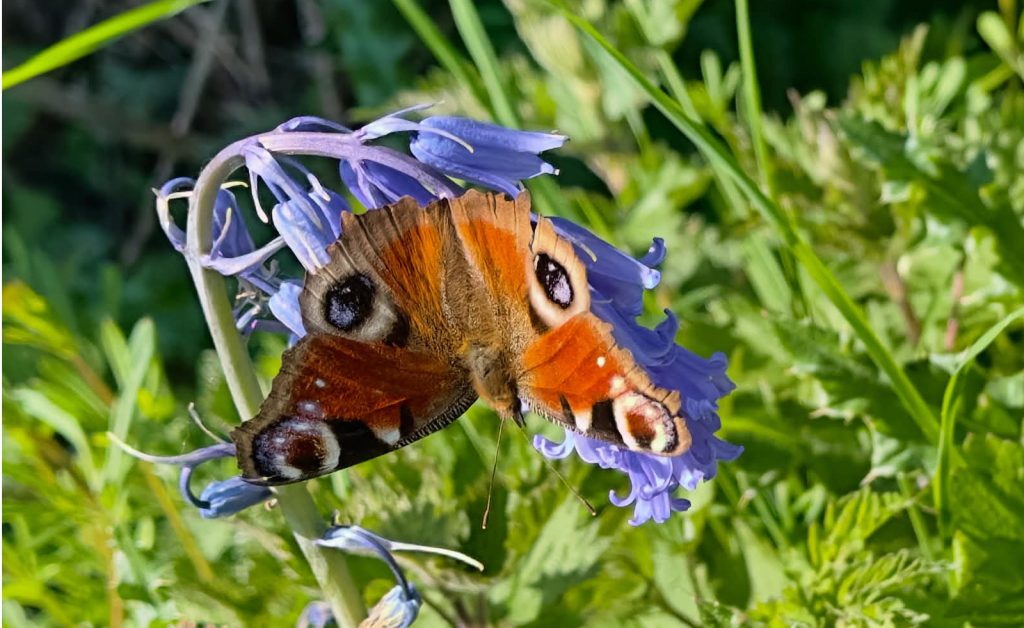
Name: Peacock butterfly
Latin Name: Aglais io
Most likely to be seen: Park House Sensory Garden, the tennis court flower beds or sunny paths, spaces or benches.
Wildlife Spotter rating: Easy
Did you know?
Peacock butterflies can make a tiny hissing sound by rubbing their wings together, it helps scare off predators.
Photo: Conor Weedon. Do you have pictures peacock butterflies in the park that we could use? If so, please contact us.
The peacock butterfly is one of the most colourful and eye‑catching butterflies in the UK. Its wings are deep red with large blue and yellow “eye spots” that look a bit like the feathers of a peacock, which is how it got its name. When the butterfly opens its wings, these eye spots can startle birds and other predators, giving it a chance to escape.
Peacocks love warm, sunny weather and are often seen feeding on nectar from buddleia, thistles, dandelions and other wildflowers. They are strong fliers and can glide or dart quickly between plants. On cooler days, you might spot one resting on a warm wall, path or tree trunk, soaking up the sun.
One of the most remarkable things about peacock butterflies is how they survive winter. They hibernate as adults, often hiding in sheds, hollow trees or even quiet corners of houses. When spring arrives, they emerge looking almost as bright as they did the previous summer.
Female peacocks lay their eggs on stinging nettles, which are the main food plant for their caterpillars. The caterpillars are black with tiny white spots and spines, and they often gather in groups on the same plant.
How to be a Peacock Protector
To help peacock butterflies you can:
- Grow nectar‑rich flowers: Buddleia, thistles, dandelions and other native blooms help adults feed.
- Leave a patch of nettles: Caterpillars rely on stinging nettles to grow and survive.
- Keep wild corners wild: Peacocks use brambles, ivy and sheltered spots for resting and hibernating.
- Avoid pesticides: Chemicals can harm butterflies, caterpillars and the plants they depend on.
- Let them bask: If you see a peacock sunning itself, enjoy watching, they’re warming up for their next flight.