

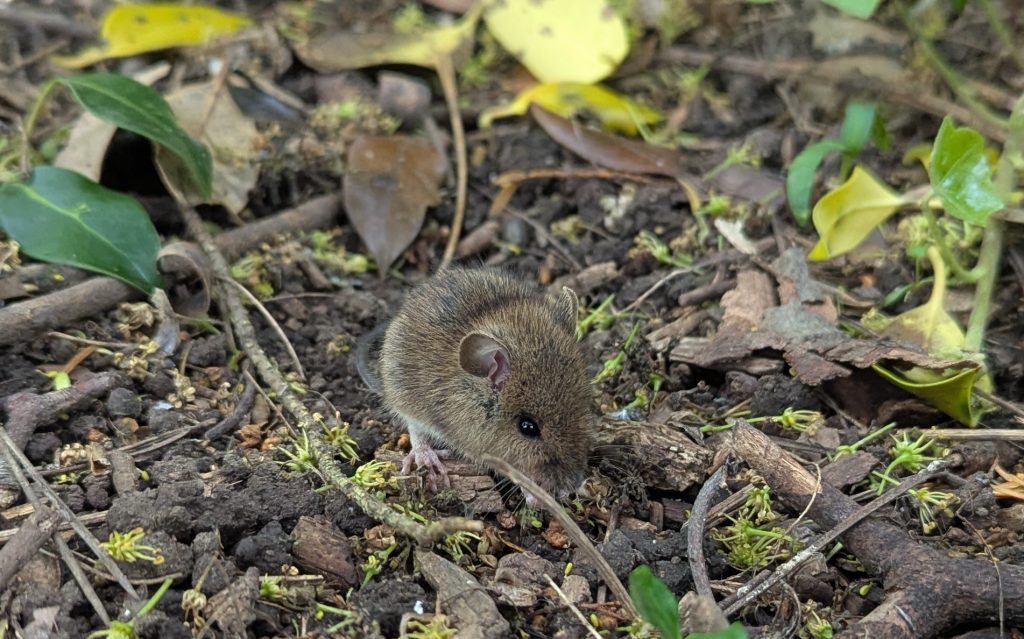
Name: Wood mouse (aka Field mouse)
Latin Name: Apodemus sylvaticus
Most likely to be seen: Among hedges, woodland edges and quieter corners of the park.
Wildlife Spotter rating: Very difficult
Did you know?
Wood mice can jump up to 80 cm (taller than most school desks), thanks to their powerful back legs.
Photo: Adam Tweed. Do you have pictures wood mice in the park that we could use? If so, please contact us.
The wood mouse is one of the most widespread small mammals in the UK, but you’ll rarely see one for long. With their big eyes, large ears and sandy‑brown fur, they are perfectly adapted for life in the undergrowth. They are mostly active at night, but you might spot one darting between shrubs or disappearing into a hedge at dusk.
Wood mice are excellent climbers and incredibly quick. They use their long tails for balance and their sensitive whiskers to explore dark tunnels and narrow gaps. Their large eyes help them see in low light, and their strong sense of smell helps them find food.
These mice eat seeds, berries, nuts, fungi and insects. In autumn, they gather and store food in hidden underground chambers, creating little winter larders. They don’t hibernate, but they do spend more time tucked away in cold weather, using their stored food to survive.
Wood mice play an important role in the ecosystem. By burying seeds and forgetting some of them, they help new plants and trees grow. They are also an important food source for owls, foxes and other predators, helping to keep the food web in balance.
Although they are wild animals and prefer to stay hidden, wood mice are gentle creatures that avoid people. Keeping the park tidy helps ensure they have natural food to eat and safe places to shelter.
How to be a Wood Mouse Wonder
To help wood mice you can:
- Leave natural areas undisturbed: Logs, leaf piles and hedges give wood mice places to hide and nest.
- Take litter home: Food waste attracts larger animals and makes life harder for small mammals.
- Avoid feeding wildlife: Wood mice thrive when they find natural food, not human snacks.
- Plant native shrubs: Hawthorn, hazel and bramble provide berries and shelter.
- Enjoy their quick movements: If you spot one, it will likely vanish in a flash, that’s part of their charm.