

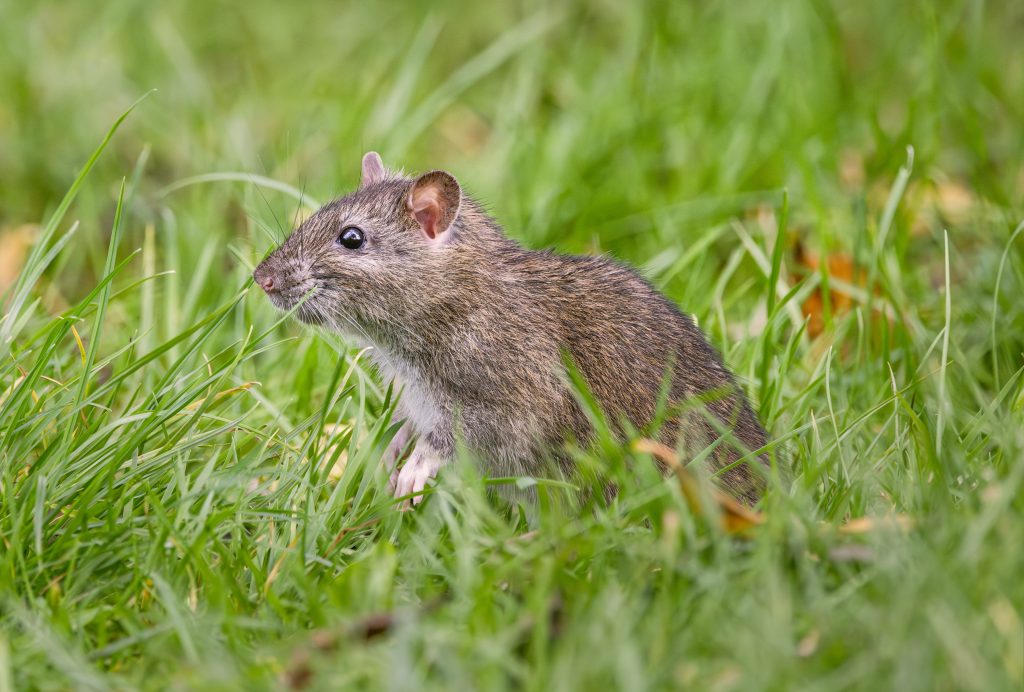
Name: Brown rat
Latin Name: Rattus norvegicus
Most likely to be seen: Around the pond, hedges (particularly along North Parade) and any areas where food is left.
Wildlife Spotter rating: Fairly easy
Did you know?
Rats are incredibly intelligent, they can solve puzzles, learn routes, recognise human faces and even show empathy towards other rats.
Photo: Victoria Bowers on Pexels . Do you have pictures rats in the park that we could use? If so, please contact us.
The brown rat is one of the most adaptable mammals in the UK and is far more intelligent than most people realise. With their sharp senses, quick movements and excellent memory, rats are experts at finding food and navigating the world around them. They live in family groups and communicate using squeaks, body language and even ultrasonic sounds we can’t hear.
Rats are naturally shy animals and prefer to stay hidden. In parks, they are most often seen near water or in areas where people regularly drop food. They are excellent swimmers and climbers, and their strong teeth allow them to gnaw through tough materials a skill that helps them survive in many different environments.
Although rats have a reputation for being pests, they play an important role in the ecosystem. They help clean up fallen food, act as prey for birds of prey and foxes, and are part of the natural balance of wildlife in urban spaces. The main reason rats become very visible in parks is simple: when lots of food is left out, their numbers grow quickly.
By understanding their behaviour and reducing the amount of leftover food and litter in the park, we can keep rat populations at healthy, natural levels while still respecting them as living creatures.
How to be a Rat Respecter
To help keep rats (and the whole park) healthy you can:
- Take litter home: Food scraps and packaging attract rats and can harm other wildlife.
- Avoid feeding birds too much: Extra bread and seed often ends up on the ground, which encourages rats to gather.
- Use bins properly: If a bin is full, please find another (there are lots!) as this stops rats from finding easy meals.
- Appreciate their cleverness: Rats are smart, social animals doing their best to survive in the spaces we share.