

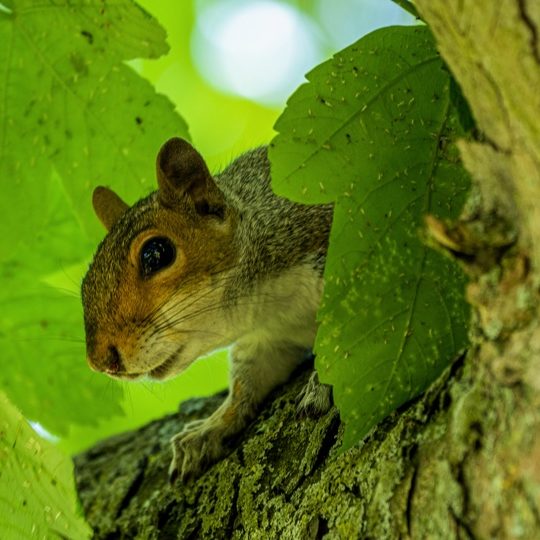
Name: Grey squirrel
Latin Name: Sciurus carolinensis
Most likely to be seen: In and around the trees all over the park, particularly along the North Parade side.
Wildlife Spotter rating: Very easy
Did you know?
Grey squirrels can rotate their back feet all the way round when climbing down trees, helping them grip.
Do you have pictures of grey squirrels in the park that we could use? If so, please contact us.
Grey squirrels are one of the most familiar animals in Horsham Park. With their bushy tails, bright eyes and quick movements, they are easy to spot scampering across the grass (often being chased by a dog) or leaping between branches. They are active during the day, especially in the early morning and late afternoon.
Squirrels spend much of their time searching for food. They eat nuts, seeds, berries and fungi, and are well known for burying acorns and other treats to dig up later. Although they don’t always remember where they’ve hidden everything, which helps new trees grow!
Grey squirrels build nests called dreys, usually high up in trees. These are made from twigs, leaves and moss, and provide shelter from rain and cold weather. In spring, you may see young squirrels exploring the branches near their nest, learning to climb and jump with increasing confidence.
Although they are fun to watch, squirrels can become bold if they are fed by people. This can lead to them approaching visitors too closely or becoming dependent on human food, which isn’t good for their health.
How to be a Squirrel Supporter
To help grey squirrels you can:
- Watch from a distance: Squirrels are wild animals and stay healthiest when they find their own food.
- Don’t feed them: Human snacks aren’t good for squirrels and can encourage unwanted behaviour.
- Take litter home: Food wrappers and plastic can be harmful if squirrels chew or get tangled in them.
- Protect trees and plants: Young trees and bulbs benefit from simple guards if squirrels are active nearby.