
Name: Mute Swan
Latin Name: Cygnus olor
Most likely to be seen: On the pond or grazing on the grass nearby.
Wildlife Spotter rating: Easy
Did you know?
Mute swans aren’t really mute, they make soft hisses and grunts, but they’re much quieter than other swans.
Do you have any pictures of the mute swans in the park that you’d like to see on our website? If so, please contact us.
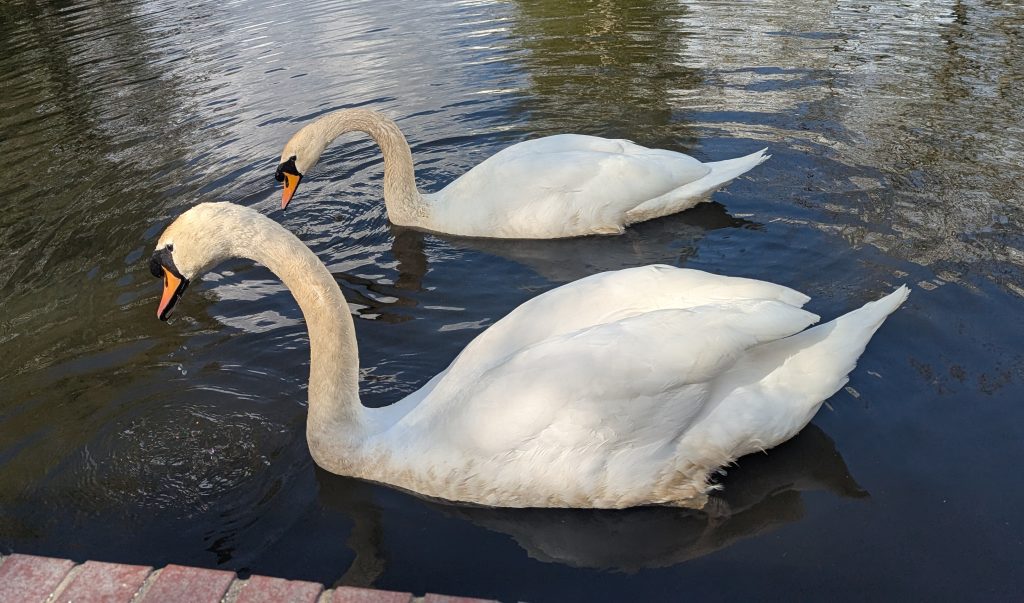
Mute swans are one of the most familiar and elegant birds in the UK. With their white feathers, long curved necks and orange bills with a black bump at the base, they are easy to recognise. They are strong, confident birds and are often seen gliding across the water in pairs or small family groups.
Male and female swans are very difficult to tell apart. Typically, males are slightly larger and during the breeding season the black bump at the base of the male’s bill will swell and will be noticeably larger.
Swans spend much of their time feeding on aquatic plants, dipping their long necks below the surface to reach vegetation. On land, they graze on short grass, which is why you’ll often see them wandering around the edges of the pond or resting on the grassy banks.
Although they look calm, swans can be very protective, especially during the breeding season. From March onwards, they build large nests close to the water’s edge. The female lays a clutch of eggs, and both parents guard the nest. Once the cygnets hatch, they stay with their parents for several months, learning to feed and building up strength for their first flights.
As one of the UKs largest birds, swans need a long “runway” to get airborne. They will flap their wings and run along the surface of the water, which can be very noisy and one of their less-graceful activities.
Mute swans are protected birds in the UK, and parks like Horsham provide safe places for them to feed, nest and raise their young. Keeping the pond clean and free from litter is especially important, as discarded plastic and fishing line can be dangerous for them (as well as other wildlife).
How to be a Swan supporter
To help mute swans you can:
- Give them space: Watch from a distance so you don’t disturb nesting swans or young cygnets.
- Don’t feed swans bread: Bread isn’t good for swans, if you want to feed them, offer leafy greens or special waterfowl food.
- Leave nests alone: Swans nest on the ground and can be easily disturbed.
- Take litter home: Plastic, fishing line and food packaging can injure swans and other water birds.
Please note:
Dogs are not allowed in the fenced area around the pond; this helps protect swans and other wildlife in this area from accidental harm or stress.