

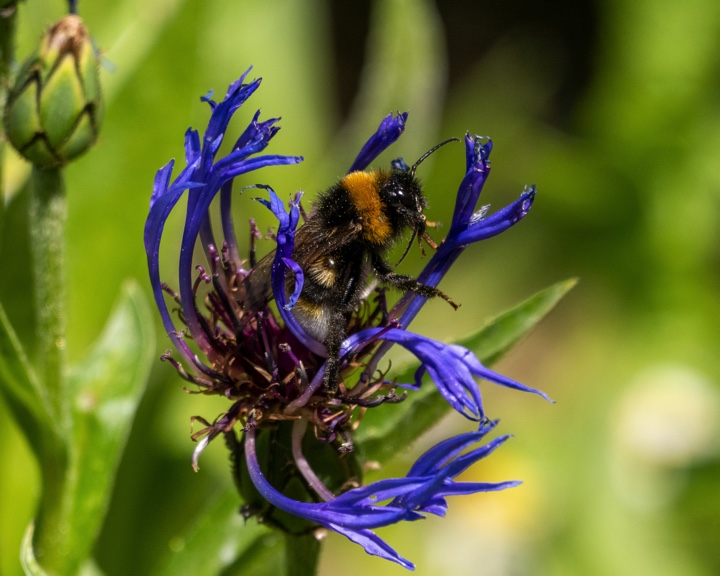
Name: Bumblebee
Latin Name: Bombus
Most likely to be seen: In the flowerbeds across the park and in the meadow.
Wildlife Spotter rating: Very easy
Did you know?
Bumblebees beat their wings about 200 times every second and can fly at speeds of up to 15 miles per hour! (About as fast as a person cycling on a flat path.)
Do you have any pictures of bumblebees in the park that we could use? If so, please contact us.
Bumblebees are some of the most familiar insects in the park, easily recognised by their round, furry bodies and steady, buzzing flight. Bumblebees belong to the genus Bombus, which includes all the large, furry bumblebees most people recognise. There are many different species within this group.
There are around 24 species of bumblebee in the UK, and several can be seen feeding on flowers throughout the park from spring to autumn. Bumblebees are important pollinators, helping fruit trees, wildflowers and garden plants to produce seeds and fruit. Their thick fur and strong wingbeats allow them to fly in cooler weather than many other insects, which is why they’re often among the first pollinating insects you see each year. They are gentle insects and only sting if threatened.
Although bumblebees can look alike at first glance, there are a few simple clues to help tell species apart. You don’t need to get close; watching from a safe distance is enough to notice the patterns. The tail colour is perhaps the most obvious helpful feature, it may be white, orange, red or even ginger. Then you can look at the colour bands on the rest of the body: some species have two yellow stripes, others only one, and some have none at all.
How to be a bee buddy
To help bumblebees you can:
- Plant nectar-rich flowers: Plant lavender, buddleia, sunflowers, foxgloves or other native wildflowers.
- Leave a wild patch: Let a section of your lawn grow long to encourage natural blooms and delay the first mowing of your lawn each year until June “No mow May.”
- Provide water: Put out a shallow dish of water with pebbles for bees to rest on while drinking.
- Don’t use pesticides: Avoid using chemical pesticides as these harm the insects we need for our gardens to be healthy.
- Look don’t touch: It’s not unusual to spot a bee on the ground, this is usually because they are warming up before their next flight, so it’s best to leave it alone.